

Curtin Dental

54 Years
in Business

13 Years with
Yellow Pages


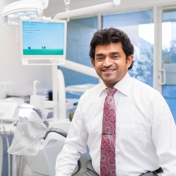






Curtin Dental is a well-established Canberra practice that has provided high-quality dentistry in Woden area for over 30 years.
We are very proud of our reputation, built on the trust which our patients place in us. Our commitment has always been to combine the latest techniques and treatments with the best of dental health care for your smile.
We offer a broad range of services, including preventative care, crowns, bridges, implants, root canal therapy, CEREC (same day crowns and inlays), bleaching, fillings and extractions. As well as a large team of dentists, we also have hygienists available. Our patients range from infants to 90 plus. Whatever your age or dental need, our focus is always to respect the patient and provide excellent treatment and care.
We aim to provide a relaxing and rewarding experience and a healthy and happy smile. For this reason, we do not compromise on the quality of our materials or our infection control procedures. Curtin Dental is committed to continual improvement, through using the latest equipment and technologies available, and also by pursuing on-going education to enhance our treatment skills and knowledge.
We have been established in Curtin for over 40years - a practice built solidly on caring for our patients, applying the highest professional standards and using the latest dental techniques. Our patients feel confident with us because we achieve worthwhile results for them. The professionalism, skills and experience of our dentists, backed by a handpicked team of wonderful support staff and the latest equipment. To make an appointment call us on (02) 6285 2222.
How white will my teeth get?
Clinical studies show that in-surgery whitening procedures deliver up to eight shades lighter and even higher for individuals with darker teeth. Results will vary as the starting points may be different and everyone's teeth respond differently. During the consultation, we will go over what you can expect for your individual situation.
What actually happens with in-surgery whitening?
Your gums and lips are protected with barrier materials and a 'before' picture is taken. The whitening gel is applied on your teeth, and the blue light activates it. You relax. After three 20-minute cycles (just over an hour), the procedure is completed and an 'after' picture is taken. You rinse. You smile. Wow!
Will the tooth need any special care or additional treatment after endodontic treatment?
You should not chew or bite on the treated tooth until you have had it restored by us. The unrestored tooth is susceptible to fracture, so you should book your next appointment for a full restoration as soon as possible. In the meantime, you need only practice good oral hygiene, including brushing, flossing, and regular check-ups and cleanings.
What happens if the pulp gets injured?
When the pulp is diseased or injured and can't repair itself, it dies. The most common cause of pulp death is a cracked tooth or a deep cavity. Both of these problems can let germs (bacteria) enter the pulp. Germs can cause an infection inside the tooth. Left without treatment, pus builds up at the root tip, in the jawbone, forming a "pus-pocket" called an abscess. An abscess can cause damage to the bone around the teeth.
Why does the pulp need to be removed?
When the infected pulp is not removed, pain and swelling can result. Certain by-products of the infection can injure your jawbones. Without treatment, your tooth may have to be removed.
How does root canal therapy save the tooth?
Treatment often takes one to three visits. To save the tooth, the inflamed or infected pulp is removed from the root canal by careful cleaning and shaping of the canal. The canals are then sealed completely to prevent re-infection. After this treatment, a crown or other restoration is placed on the tooth to protect and restore it to full function.
What is the dental pulp?
The pulp is the soft tissue that contains nerves, blood vessels and connective tissue. It lies within the tooth and extends from the crown of the tooth to the tip of the root in the bone of the jaws.
What are the signs of needing root canal treatment?
Signs to look for include pain, prolonged sensitivity to heat or cold, tenderness to touch and chewing, discoloration of the tooth, swelling, and tenderness in the lymph nodes as well as nearby bone and gingival tissues. Sometimes, however, there are no symptoms.
What causes an endodontically treated tooth to need additional treatment?
New trauma, deep decay, or a loose, cracked or broken filling can cause new infection in your tooth. In some cases, the endodontist may discover additional very narrow or curved canals that could not be treated during the initial procedure.
Can all teeth be treated endodontically?
Most teeth can be treated. Occasionally, a tooth can't be saved because the root canals are not accessible, the root is severely fractured, the tooth doesn't have adequate bone support, or the tooth cannot be restored. However, advances in endodontics are making it possible to save teeth that even a few years ago would have been lost. When endodontic treatment is not effective, endodontic surgery may be able to save the tooth.