
Bass Hill Vet

36 Years
in Business



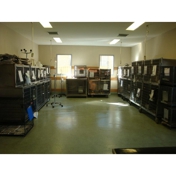

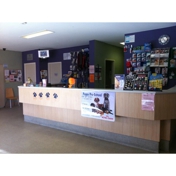
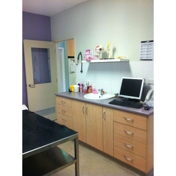

Bass Hill Veterinary Hospital provides our customers with affordable and efficient pet care to animals across Western Sydney.
We have an experienced team of 5 vets and 7 support staff who are extremely dedicated to our patient's health and wellbeing. We pride ourselves on offering the highest quality veterinary care. We have a large, modern purpose built hospital with state of the art equipment.
Bass Hill Vet has been an integral part of our local community for years. In that time, we've helped thousands of our client's cats & dogs, rats, mice, rabbits & guinea pigs, ferrets, birds, horses and even a few snakes. Being so strongly integrated with our local community is important to us and our clients. Our customers know by experience that they can rely on us for sound advice and treatment options and that their pet is in the very best hands with our team.
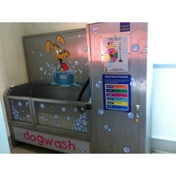
Meet Our Team:Dr David Harney Dr Edward Humphries Dr. Edmund Daubaras Dr. Kelley Skilbeck Dr. Andrew Gendi Dr. Adam Fink Services We Provide:General Health Consultations Vet Services Vaccinations & Microchipping Parasite Treatments & Control Desexing All Soft Tissue Surgery Microchipping Service Grooming Orthopaedic Surgery including pining & platings Dental care & surgery Free Dental check-ups Self-Serve dog wash Puppy Preschool
At Bass Hill Vet, you'll be fully supported with sound advice first and foremost. We know that helping our client's starts with providing a good understanding of health care issues and treatment options. With good advice and professional recommendations we will equip you so you can make the best ongoing health care decisions for your pet.
 Bachelor of Veterinary Science - Dr David HarneyBVSc. (Hons), MRCVS (London) - Dr Edward HumphriesBachelor of Veterinary Science (Sydney)- Dr. Edmund Daubaras
When should we desex our female dog?
At Bass Hill Veterinary Hospital, we advise that any female dog can be desexed from 6 months of age. By desexing a dog at this age, the incidence of breast cancer is greatly reduced. We can desex at an earlier age if required however we recommend desexing at 6 months of age.
Should we desex our female dog?
Desexing a female dog stops all signs of being on heat. There is no further bleeding, no attraction for male dogs, and if desexed when the dog is 6 months of age it will reduce the risk of breast cancer by up to 90%. Also desexing eliminates the risk of pyometra (infected uterus) as desexing involves removing the uterus.
Are there any disadvantages?
It is a common fallacy that a desexed pet will become fat and lazy. Correct feeding of a premium diet (e.g. Royal Canin, Advance) without any extras should prevent obesity. Desexing at 6 months coincides with a reduced growth rate so it is important to reduce food intake. Desexing does not cause a pet to lose its character. Pets may be more gentle but they neither lose their spirit nor their intelligence. Playfulness and socialisation with humans will not change.
What food is toxic to my dog?
Many household chemicals and foods can be dangerous for dogs. Even some plants. However, it is important not feed you dog: onions, mushrooms, macadamia nuts, chocolate ( the darker the chocolate the more toxic), cooked bones, grapes, sultanas, high fat foods, raw eggs, xylitol (chewing gum), dairy products, peach seeds, avocado and corn cobs.
At what age do you recommend desexing your pet?
Our vets recommend desexing males & females at 6 months of age.
When can I book my pet in for desexing?
Pets can be booked in for desexing from Monday to Friday. They are left with us in the morning between 8am and 10am (on an empty stomach) and collected the same evening. All patients having surgery receive strong pain relief to maintain their comfort. Please ring us if you have any further queries or if you would like to make an appointment.
What vaccinations should my kitten have?
We recommend a series of 3 vaccinations for all kittens. The first an F3 at 6 -8 weeks of age. This is for 2 strains of cat flu, and for Feline Enteritis (Panleukopaenia). The next vaccination is at 12-14 weeks of age with an F5. This covers 2 extra components being Feline Chlamydia, and Feline Leukaemia. The final kitten vaccination is at 16-18 weeks with a repeat of an F5. It is also possible to provide protection against Feline Aids (FIV ). Please discuss this with your veterinarian.
What vaccinations should my puppy have?
We recommend a series of 3 vaccinations for all puppies. The first a C3 at 6 -8 weeks of age. This covers Distemper, Hepatitis and very importantly Parvovirus. The next vaccination is at 12-14 weeks of age with a C7. This covers 4 extra components of 2 types of Kennel Cough plus Coronavirus and Leptospiros. The final puppy vaccination is at 16-18 weeks with repeat of a C7.
My pet is coming in for surgery. What do I have to do before hand and are there any precautions that we can take?
When surgeries involve an anaesthetic, it is very important that your pet is fasted, and has no food for the 12 hours prior to the operation. Please leave water out until the morning of the surgery. Just like in people, a series of pre-anaesthetic blood tests can be taken to check your pet's organ function, so we can take the necessary precautions for a safe anaesthetic. Further information will be given upon admission of the animal.
Do you desex male dogs?
Yes! Besides the obvious of not being able to get a female dog pregnant. Even more importantly, desexing a male dog will; - Reduces the likelihood of cancer of the prostate - Reduces the urge to stray to find a female dog - Reduces aggression - Reduces territory marking - Reduces risk of testicular cancer
How can I contact Bass Hill Vet by phone?
You can contact Bass Hill Vet on (02) 7989 1537.
Where is Bass Hill Vet located?
Bass Hill Vet is located at 731 Hume Highway, Bass Hill, NSW 2197.
How can I email Bass Hill Vet?
You can email Bass Hill Vet at [email protected].
Does Bass Hill Vet have a website?
Yes. You can visit Bass Hill Vet online at https://www.basshillvet.com.au.
What are the opening hours for Bass Hill Vet?
The opening hours for Bass Hill Vet are Mon - Fri: 8:00 am - 7:00 pm; Sat: 9:00 am - 4:00 pm; Sun: 9:00 am - 2:00 pm.
What type of business is Bass Hill Vet?
Bass Hill Vet is listed under Veterinary Animal Clinics & Hospitals.
What payment methods does Bass Hill Vet accept?
Bass Hill Vet accepts cheque, money order, mastercard, visa, eft, cash.
Is Bass Hill Vet on social media?
Yes. You can follow Bass Hill Vet on Facebook.
Is Bass Hill Vet locally owned?
Yes. Bass Hill Vet is a locally owned business.
07/05/2024
Great service. My go to place when my pets need their check-ups and/or not feeling well.
06/04/2021
Bass Hill vet is very caring people. They responded to my enquire really fast and I’m glad that and happy.
But everyone at this vet clinic is kind.
Regards Liana

