
RM Turbochargers

42 Years
in Business

1 Year with
Yellow Pages

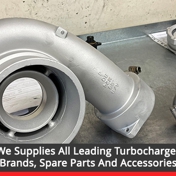
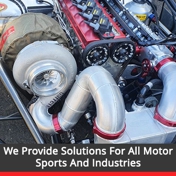
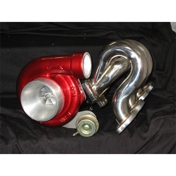

Specialising in Garrett turbochargers & intercoolers, rebuilds & repairs, parts & accessories. Servicing Australia wide.
There is a lot more to turbochargers than what meets the eye. Knowing how to build a turbo system for a specific application takes knowledge and experience. With over 30 years experience and all the leading brands available, RM Turbochargers provide solutions for all motor sports and industries. Australia wide delivery
R.M Turbochargers is one of Australia's leading Garrett turbocharger distributors. We specialise in distribution of Garrett turbochargers, parts and accessories. We also service turbochargers for all makes and models of cars, 4WDs and trucks. We are your one-stop-shop for everything turbocharger related.
Free strip & quote New turbocharger sales Changeover turbocharger sales Overhaul/service & repairs to most makes & models of turbochargers Modifications to turbochargers e.g. hi-flow, ball bearing conversions, turbine housing modifications etc. Installation of turbocharger kits to diesel 4WD Balancing - VSR/standard Parts & accessory sales Technical support
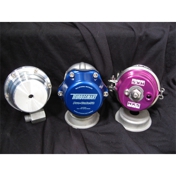
We carry a range of Garrett and universal products to suit most turbocharger applications, including:Gaskets Flanges Oil supply & return pipes & adapters Waste gates Boost gauges Heat blankets Actuators Actuator brackets & rods Surge slots V-bands & outlet rings Speed sensors Fitting kits
 Garrett - Authorised DistributorVACC
What is the difference between an air-to-air intercooler and to water-to-air (liquid to air) intercooler?
An air-to-air intercooler uses ambient air flowing over the fins to cool the charge air, while an air-to-water intercooler, uses coolant (water) with a system similar to that of a radiator's cooling system. Traditionally, air-to-air intercoolers are used for street applications because of their lower cost and reduced complexity, while air-to-water intercoolers are used in race and packaging-constrained applications.
What is the purpose of an Intercooler?
An intercooler primary function is to cool the charge air after it has been heated due to boosting and the heat that is produced by the turbo before sending the air into the engine. As the air is cooled, it becomes denser and denser air makes for better combustion (more power). Additionally, the denser, cooler air helps reduce the chances of knock.
How significant is a leak in my intercooler?
For an air-to-air intercooler, a leak, as long as it is not a significantly large one, will not hinder performance at all. However, if an air-to-water intercooler develops a leak in the main core, it could lead to other more significant problems with the engine itself. Be sure to fix these problems as soon as they occur to prevent other damage.
What is intercooler heat soak?
Heat soak is when the intercooler can't dissipate the heat that it absorbs from the turbo fast enough. When an intercooler can't cool the charge air by removing the heat from it, it loses its effectiveness. This explains why turbo cars tend to run slower or have slightly less power when the weather is warm.
Will a FMIC block flow to my radiator?
No, since the intercooler allows air to pass through it, airflow to the radiator will not be blocked. However, using an intercooler core that is too thick and does not allow air to pass through it quickly or completely and airflow to the radiator can be restricted which can lead to potential overheating problems.
What is the best placement of my intercooler?
The best place for your intercooler is directly in the path of the inflow of ambient air. Traditionally this has been right in front of the radiator in the front of the car, hence the term Front Mount Intercooler.
I want to turn up my boost, is a larger intercooler necessary?
Usually, it is not necessary to upgrade the intercooler when raising boost levels. The pressure drop contributed by the intercooler is proportional to its flow (CFM) squared. This relationship shows that it is highly unlikely the change resulting in loss from higher boost levels will require a larger intercooler. If there is significant change, however, such as 40% or 50%, then a larger intercooler may be necessary.
Is there a maximum amount of boost I can run on my intercooler?
While it is possible that an intercooler can fail from boost levels being too high, it is a very rare scenario. However, if not properly designed to handle high boost, cracking along seams and of the end tanks can occur.
Will an intercooler help make more horsepower?
Yes, although it is only indirectly responsible for helping make more power. Since the intercooler increases the charge air density, an intercooled engine will typically make more power than a non-intercooled engine with the same setup by allowing more air to be crammed into each cylinder.
I want my car to remain a sleeper/stealth. Can I paint or anodize my intercooler so it is not easily visible?
Yes, it is not uncommon at all for an intercooler and end tanks to be anodized black to keep attention away from the car and help it maintain a sleeper appearance. A very light coat of paint on the core and end tanks is also another option, usually much cheaper and easier than anodizing, with a negligible performance loss.
How can I contact RM Turbochargers by phone?
You can contact RM Turbochargers on (03) 8652 1247.
How can I email RM Turbochargers?
You can email RM Turbochargers at [email protected].
Does RM Turbochargers have a website?
Yes. You can visit RM Turbochargers online at https://www.rmturbochargers.com.au.
What are the opening hours for RM Turbochargers?
The opening hours for RM Turbochargers are Mon - Fri: 8:00 am - 5:00 pm; Sat: 8:00 am - 12:00 pm.
What type of business is RM Turbochargers?
RM Turbochargers is listed under Car Parts, Motor Accessories - Wsalers & Mfrs, Turbochargers.
What payment methods does RM Turbochargers accept?
RM Turbochargers accepts mastercard, visa, cash, amex.
Is RM Turbochargers on social media?
Yes. You can follow RM Turbochargers on Facebook.
Is RM Turbochargers locally owned?
Yes. RM Turbochargers is a locally owned business.