

GalleryView all (8)


About Us

Welcome To Sydney Retina Clinic & Day Surgery.
- Comfortable environment
- Experienced nursing staff
- Fully equipped ophthalmic operating theatre
- Professional and caring environment
- Using latest instruments, techniques & technol
- General Info
Specialises in the diagnosis and treatment of retinal conditions using the latest instrumentation, techniques and technology.
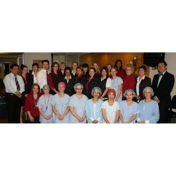
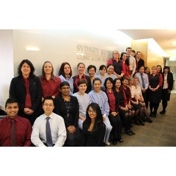
We are dedicated to providing our patients with essential eye care. Sydney Retina comprises of an eye clinic, day surgery and a research department. Our clinic and day surgery are staffed with Doctors, Ophthalmic Nurses, Orthoptists and our Administration team. Our eye clinic specialises in the diagnosis and treatment of a wide range of challenging eyesight conditions. Our research team runs multiple clinical trials and studies.
Surgery is performed under local anaesthesia by a specialist anaesthetist without overnight stay. Sydney Retina Clinic, which has been accredited with AS/NZS ISO9001 quality management system, is committed to providing state of the art care to all patients. Sydney Retina Clinic and Day Surgery is owned and operated by Dr Andrew Chang.
Sydney Retina Clinic and Day Surgery is committed to providing some of the highest standards of care. Our day surgery facility has a fully equipped ophthalmic operating theatre for complex retinal surgeries. Our highly experienced operating theatre, recovery and anaesthetic staff strive to make the surgery a safe, comfortable and friendly environment.
Our facility is an emergency day surgery. Emergency conditions such as retinal detachments, tears, dislocated intraocular implants, and infections, are treated as top priority. The day surgery facility also specialises in vitrectomy and macula surgeries such as macular holes, epiretinal membranes and macular degeneration.
- Accreditations
 MBBS(Hons), PhD - Dr Andrew ChangBSc (Med), MBBS (Hons 1), MHA, MPH, PhD - Dr Samantha Fraser-BellMBBS - Dr James Wong
- Email Business
- ABN
- 87 095 940 239
- Ownership
- Locally Owned
- Service Notes
- Open Monday to Friday
- Free Estimates
- Yes
- Other Link
- Categories
- Licenses
- Legal ID: Our facility is an emergency day surgery
- Keywords
- Cataracts, Diabetic Eye Disease, Epiretinal Membrane, Flashes and Floaters, Genetic Retinal Disorders, Macular Degeneration, Macular Hole, Myopia, Ocular Trauma, Retina, Retinal Tear and Detachment, Retinal Vascular Disorders, Retinal or Macular Haemorrhage, Uveitis

FAQs
What is a giant retinal tear?
A large break involving at least one quarter of the retina (3 clock hours).
What is a retinal detachment?
A retinal detachment occurs when the retina is pulled away from its normal position. The retina loses function when it is detached because the nutrition does not reach the retina. Therefore, the vision is blurred in the area of the retinal detachment. A retinal detachment is a serious condition and may result in blindness unless it is treated.
Can I attend my other medical appointments?
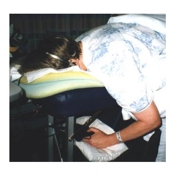
If there is gas in the eye, you need to let your Dentist or doctor know before they use anaesthetic agents (show them the green wrist band). You can attend your other medical appointments.
What treatment is needed for a vitreous detachment?
In an uncomplicated vitreous detachment no treatment is required. However, your ophthalmologist will arrange follow-up to ensure that no further problems occur.
What are the symptoms of a macular hole?
In the very early stages of a macular hole forming, the vision can become blurred and distorted. If the hole progresses, a blind spot develops in the centre of vision. When this happens, central or detailed vision is lost. A blind spot develops directly in the centre of what you are looking at. The peripheral vision remains normal. There is no pain associated with a macular hole forming.
What is OCT?
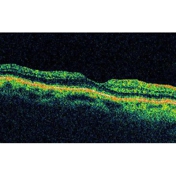
OCT, which stands for Optical Coherence Tomography, is a highly specific diagnostic test that allows us to examine the cell layers of the retina and optic nerve in detail. Similar to the ultrasound technique, OCT uses scattering of light to rapidly scan the eye, providing a cross section of the cell layers of the retina. With this information, the treating ophthalmologist is able to detect ocular conditions, sometimes before the symptoms manifest in the patient.
What treatment is needed for retinal tears?
Retinal tears require treatment using laser surgery or retinal cryotherapy (freezing), which seals the retina to the back wall of the eye. Laser is often performed using a lens placed on the eye as an outpatient procedure in the Clinic. Retinal cryotherapy is performed in the Day Surgery using local anaesthesia. These procedures do not involve open surgery.
What is the retina?
The retina is the light-sensitive layer of tissue covering the inside of the back of the eye. It is similar to film in a camera and "sees" the image formed by the front of the eye. The centre of the retina is called the macula. The vitreous is a clear, jelly-like fluid that fills the inside of the eye and is attached to the retina at certain points.
Can I take my usual eye drops?
Yes, continue with your usual eye drops.
Can I patch the eye?
You must not use a patch or cover the operative eye.
How can I contact Sydney Retina Clinic & Day Surgery by phone?
You can contact Sydney Retina Clinic & Day Surgery on (02) 9221 3755.
Where is Sydney Retina Clinic & Day Surgery located?
Sydney Retina Clinic & Day Surgery is located at 187 Macquarie Street, Sydney, NSW 2000.
How can I email Sydney Retina Clinic & Day Surgery?
You can email Sydney Retina Clinic & Day Surgery at [email protected].
Does Sydney Retina Clinic & Day Surgery have a website?
Yes. You can visit Sydney Retina Clinic & Day Surgery online at https://sydneyretina.com.au.
What are the opening hours for Sydney Retina Clinic & Day Surgery?
The opening hours for Sydney Retina Clinic & Day Surgery are Mon - Fri: 7:00 am - 5:00 pm.
What type of business is Sydney Retina Clinic & Day Surgery?
Sydney Retina Clinic & Day Surgery is listed under Ophthalmology, Doctors - Medical Practitioners.
Is Sydney Retina Clinic & Day Surgery locally owned?
Yes. Sydney Retina Clinic & Day Surgery is a locally owned business.