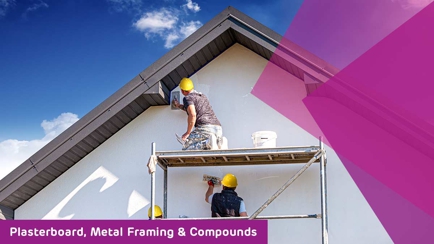

PlastaMasta South Coast

33 Years
in Business

1 Year with
Yellow Pages




We are excited to help you create the reality of your dreams.
At Coastal Distributors and PlastaMasta, we have a range of products available for any building task across New South Wales. Our expert team understand your needs and desires, and we have the knowledge and expertise to advise you on what products you need to complete your project. Our retail stores are always on hand to supply you with all the necessary knowledge and equipment to complete your project, whether that be a small renovation or a large scale building project. Visit one of our three stores to get your task started on the right foot.
PlastaMasta South Coast is a family owned and operated business situated in Yallah, Albion Park servicing the vast South Coast and Southern Highlands regions, with distributors in several locations including Fairy Meadow, Nowra and Batemans Bay. We stock and sell Siniat Plasterboard and setting materials, James Hardie External and Internal Lining Products, Rondo Steel Building Systems, Insulation and many more specialised and associated products.
Our team are consistently researching and developing their broad product knowledge, ensuring our customers have the leading edge in the industry. PlastaMasta South Coast sells to both Trade and Public, no job is too big or too small. Come in and see us for an obligation free quote, and let us help you make your dreams a reality. We are conveniently located in four locations.
How often should I install control joints?
Control joints must be installed to relieve stresses imposed by structural movement including those due to excessive changes in temperature and humidity. In long, unbroken partitions of the wall or extensive ceiling areas, control joints should be placed not more than 12 meters in either direction, at any change in the substrate material and should be aligned with control joints in the structure.
What is glancing light?
Glancing light refers to light being cast on the face of a surface showing minute undulations. As a result of this light being cast, a shadow is produced on the other side of the undulation. This draws attention to surface texture variations such as plasterboard joints and patches, which under more diffused light would not be visible.
What substrates can plasterboard fix?
Plasterboard can fix to various substrates that form wall partitions, ceilings, bulkheads or ducting arrangements. Plasterboard is most commonly fixed to steel studs, timber studs or masonry for wall partitions. Plasterboard can be fixed to ceiling framing by either directly fixing to the joists or by first installing metal furring channel and then fixing the plasterboard to the furring channel.
What type of lining should I use in wet areas such as bathrooms and laundries?
Only approved water resistant linings can be used in 'wet areas' and these include WaterShield, MultiShield, and SafeShield. Refer to the Lafarge plasterboard tech manual for installation instructions.
How do I finish a plasterboard joint once the sheet has fixed?
There are only two types of joints formed when installing plasterboard - recessed edge joints or butt joints. The recessed edge joint formed along the length of the sheets and the butt joint formed along the width of the sheet. The finishing method is the same for both types of joints, but the width of compound coverage varies.
What is the default 'level of finish' required for plastering applications?
There are three 'levels of finish' available. Level 4 is generally accepted, level of finish is for residential & commercial construction applications where flat or low sheen paints are used. Unless otherwise specified, a level 4 finish is the default finish for living areas. A level 3 finish is suitable for areas that do not require decoration, and a level 5 finish shall be used where gloss or semi-gloss paints are used or where critical lighting conditions occur on flat or low sheen paints.
What is the best way to paint plasterboard once installed?
When installed in accordance with Lafarge plasterboard installation guidelines, the finished surface of all Lafarge plasterboard accept most types of decorative finish: emulsion or oil based paints, stipples, enamels, textured coatings and wallpapers. Matt finishes give the best appearance; gloss or sheen finishes tend to highlight any surface irregularities, as will harsh or glancing light.
What type of plasterboard do I need to use for a fire rating?
Only FireShield, MultiShield, Shaft Liner, GIB X-Block and GIB Toughline can be used in fire rated systems. Please refer to the Lafarge plasterboard tech manual for wall, ceiling, column and beam encasement and ducting systems.
What is back blocking?
Back blocking is the process of reinforcing wall and ceiling joints with cut-to-size pieces of plasterboard adhered across the back of the joint with MastaBlock Back Block Cement or Cornice Cement. Back blocking helps to prevent joint cracking and peaking caused by building a movement, especially in large ceiling areas. Back blocking forms part of the plasterboard lining standard AS/NZS 2589:2007, and manufacturers' guarantees/warranties may be void if back blocking has not been carried out.
What methods of fixing should I use to install plasterboard?
The Australian Standard AS/NZS 2589:2007 allows three ways to fix plasterboard to steel or timber substrates. The options are screw fix only, nail fix only, or a combination of either screw or nail with adhesive. The preferred method is to use screws or nails with adhesive. The nail fix only method is only suitable for a level 3 finish.
How can I contact PlastaMasta South Coast by phone?
You can contact PlastaMasta South Coast on (02) 7908 2887.
Where is PlastaMasta South Coast located?
PlastaMasta South Coast is located at 68 Princes Highway, Yallah, NSW 2530.
How can I email PlastaMasta South Coast?
You can email PlastaMasta South Coast at [email protected].
Does PlastaMasta South Coast have a website?
Yes. You can visit PlastaMasta South Coast online at https://www.coastaldistributors.com.au.
What are the opening hours for PlastaMasta South Coast?
The opening hours for PlastaMasta South Coast are Mon - Fri: 6:30 am - 3:30 pm.
What type of business is PlastaMasta South Coast?
PlastaMasta South Coast is listed under Building Supplies.
What payment methods does PlastaMasta South Coast accept?
PlastaMasta South Coast accepts cash, mastercard, visa.
Can I request a quote from PlastaMasta South Coast?
Yes. You can request a quote from PlastaMasta South Coast on this page.
Is PlastaMasta South Coast on social media?
Yes. You can follow PlastaMasta South Coast on Facebook.
Is PlastaMasta South Coast locally owned?
Yes. PlastaMasta South Coast is a locally owned business.
09/30/2020
As a private person that doesn't know much about building, no question asked was to much for PlastaMasta to answer . The team went out of their way to help me and honestly sold me what I needed ,
no drama, done!